Good King Henry Seeds

Good King Henry Seed Heads
Henrietta visited the Good King Henry on a sunny July afternoon…
.
.

Strip
…and collected seeds in August and September.
.
.

Unprocessed
Good King Henry seeds are surrounded by a saponin-containing husk, and so must be washed before being eaten (who wants to eat soap!?)!
.
.

Jar
There are various methods for removing the husks, including putting them in a jar, adding water…
.
.

Shake!
…and shaking the jar until the husks come off, then pouring off the water and the foam…repeating the process a number of times.
.
.
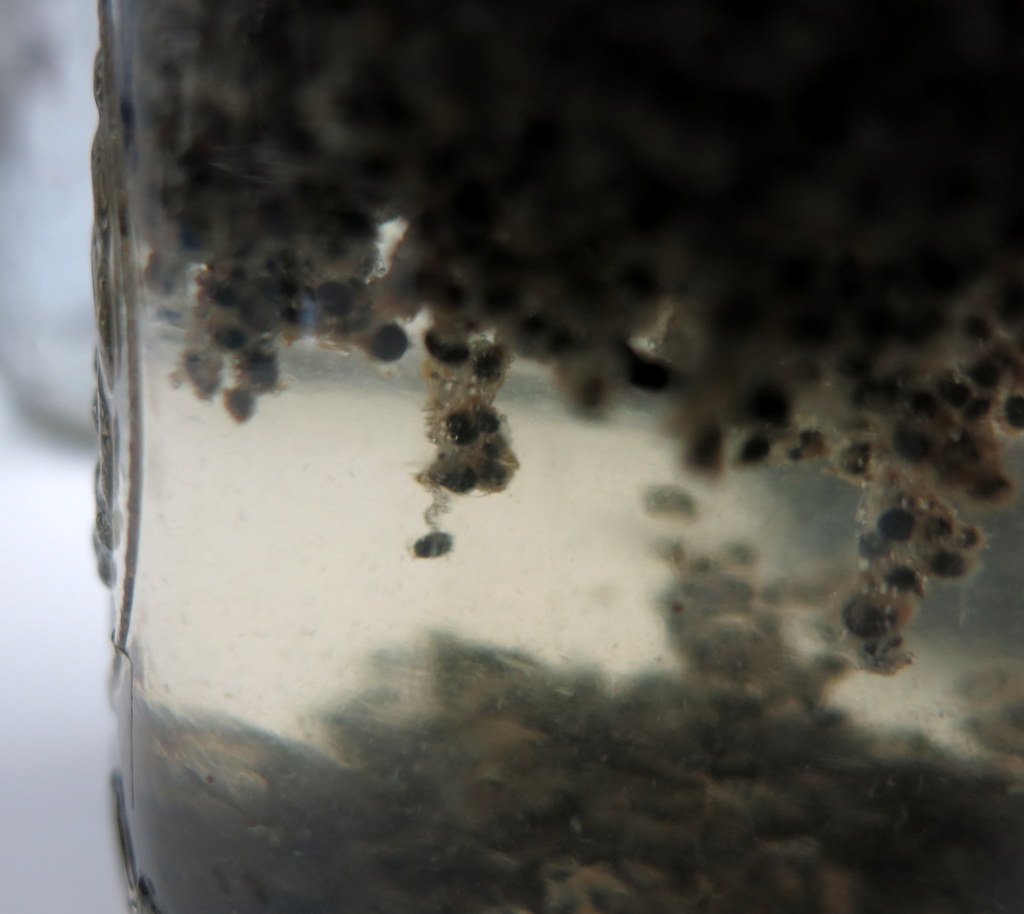
Husks
However you do it, it takes a long time, and several rinses!
.
.
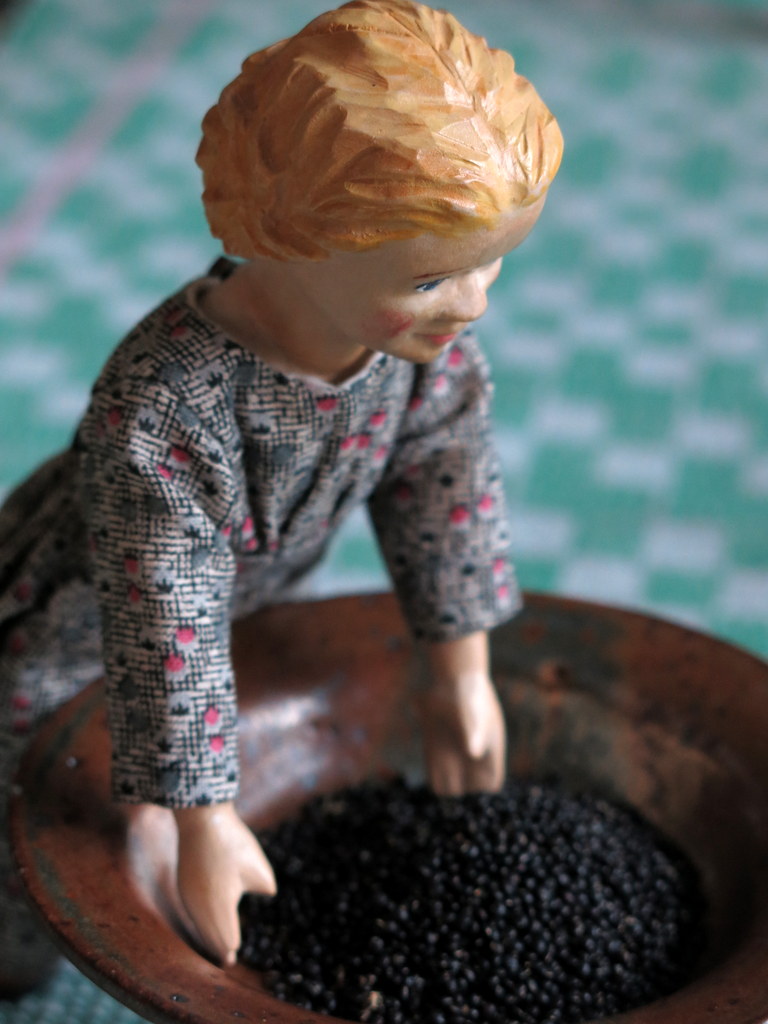
Clean!
Eventually the seeds are clean – look how black they are! They look like poppy seeds but are much harder, and gritty.
.
.

Dry
Now they are dried out, we have to decide what to do with them. Apparently they can be cooked like millet, or ground into flour and used in baking…hmmm. Wonder if Jane has any ideas?
.
.


 Quimper Hittys
Ah, do let us know if Jane has any ideas about the King Henry seeds. It was a very educational narrative today…thank you!
We are really happy to have this particular plant in the garden as it came from a gardener who got her original plant from my grandmother! I am enjoying the various ways you can eat this plant, but this is the first year I have managed to save the seeds!
What a lot of work, but a great result. Thanks for sharing the method.
Certainly a lot of work. I am enjoying the experiment though. Luckily my life and health don’t depend on this particular crop’s success!
I didn’t know the seeds of GKH were edible! I sowed some in Spring and have planted out the seedlings – some of them in one of the greenhouses for safety (!) but they are too young to have flowered. In due course I will save the seeds because I save seed from everything for the next year or to give away. When you have experimented with eating your crop please tell us what works.
It is a lot of palaver to make the seeds edible. I was curious about the taste so I’d like to try. Luckily I have that luxury!
waiting to see what Jane does with those seeds.
We’ll see! There don’t seem to be many recipes out there, just “boil it like millet” or “Grind it up into flour”. I’d like to be able to taste it!
not a plant I am familiar with…or the use of their seeds. Will be interesting to see what Jane has to say.
It was a plant that was common in the middle ages in Europe, and probably before that! Also called “Perennial Spinach”. Jane is leaning towards grinding it into flour and baking it…I’ll certainly post something about it when she does make up her mind!
I learned something new – I’ve never heard of Good King Henry before and had to look it up 🙂
It is an old old plant, much used in the middle ages, and important enough that Linneaus himself categorised it! It is one of the plants we saw in his actual garden in Uppsala! I like the plant that’s in my garden because it was grown from seed from the plant that my grandmother had in her garden!
I really enjoy following your blog – sometimes I feel transported to another time where life was less complicated and people were more connected to nature 😀
I find it really helpful to see things from a smaller point of view – the big things can just be too enormous and overwhelming.