A Miss Pinch Pelisse III
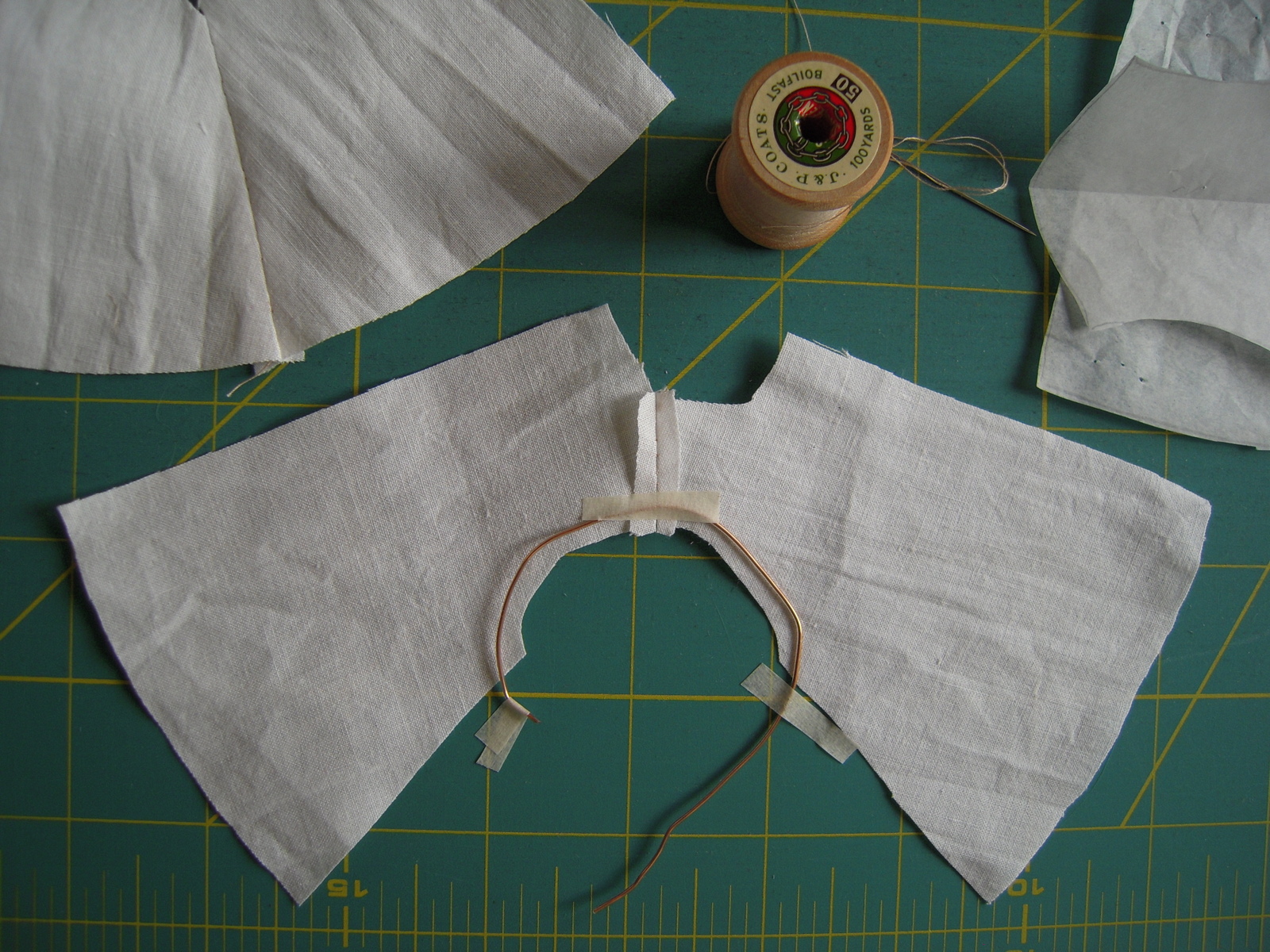
New Armscye measurement.
After trying on the tissue paper pattern, we drew the obvious changes needed right on to the paper. Next we make a dressmaker’s muslin. Fronts and backs are cut out, using the adjusted tissue paper patterns. Lowering and enlarging the armhole in the body patterns mean the sleeves will have to change too! To do this we sew the shoulder seam, and then lay a piece of wire along the stitching line of the new arm’s eye (armscye). Little pieces of tape mark the edge of the body patterns.
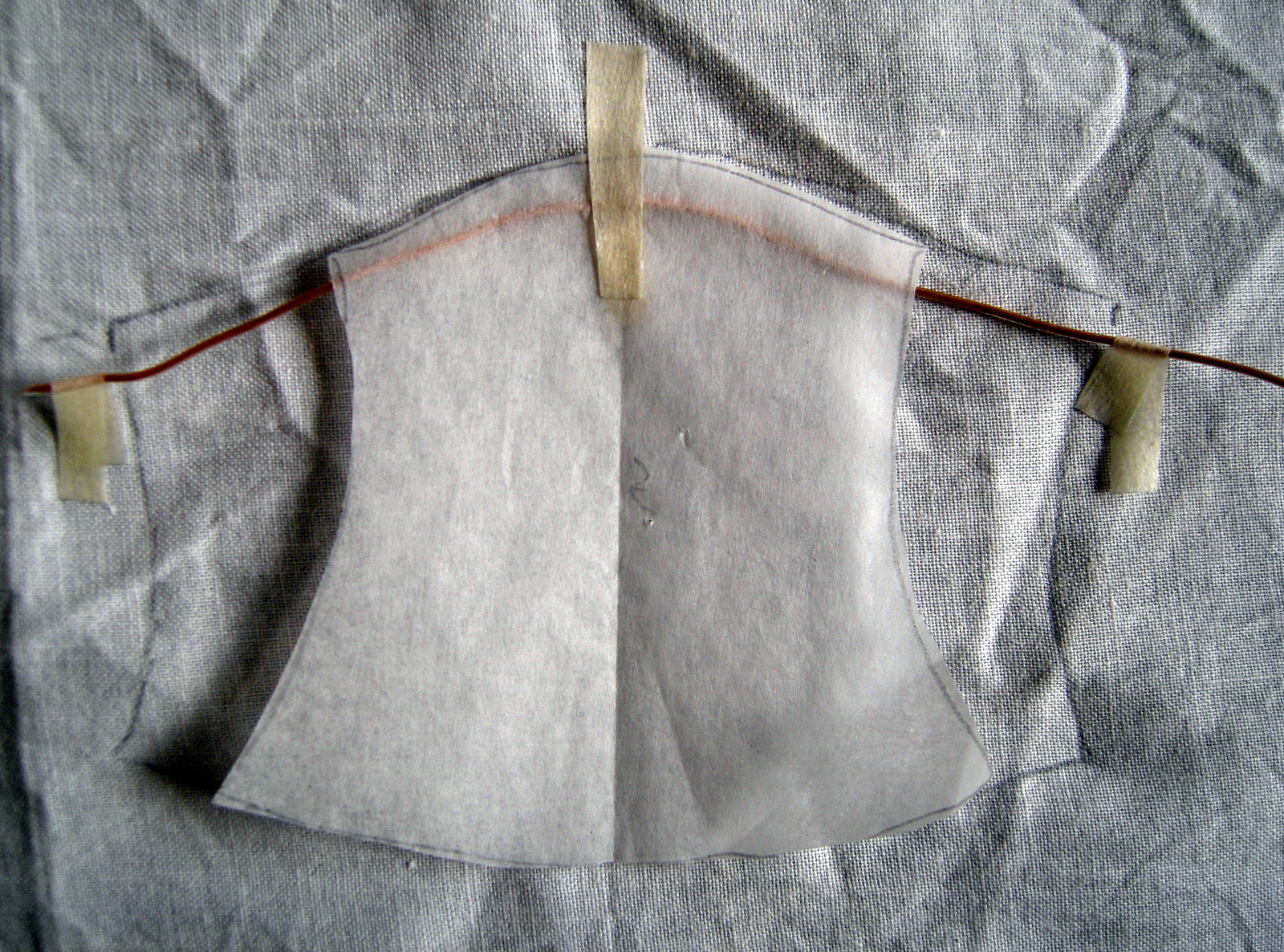
New Sleeve pattern.
The wire is re-shaped to mimic the original shape of the tissue paper sleeve pattern. The little pieces of tape show where the edges of the new pattern should be. Remembering that the wire represents the stitching line, we mark the new cutting line on the cloth above the wire.
.
.

First Muslin.
The muslin is basted together with long stitches, which can be pulled out easily. The pattern will undoubtedly need more changes, and even when it is just right, we will need to take it all apart to use it as a cutting guide on the real cloth.
.

More changes Needed
Hems and facings are taken into account by ironing the muslin in the appropriate places. Constance tries on the muslin over her dress since a pelisse is an outer garment like a coat. Clearly the pattern still needs adjustment: sleeves are too long, neckline is now too low, and though you can’t see it, the back vent too vertical… back to the drawing board!
.
.
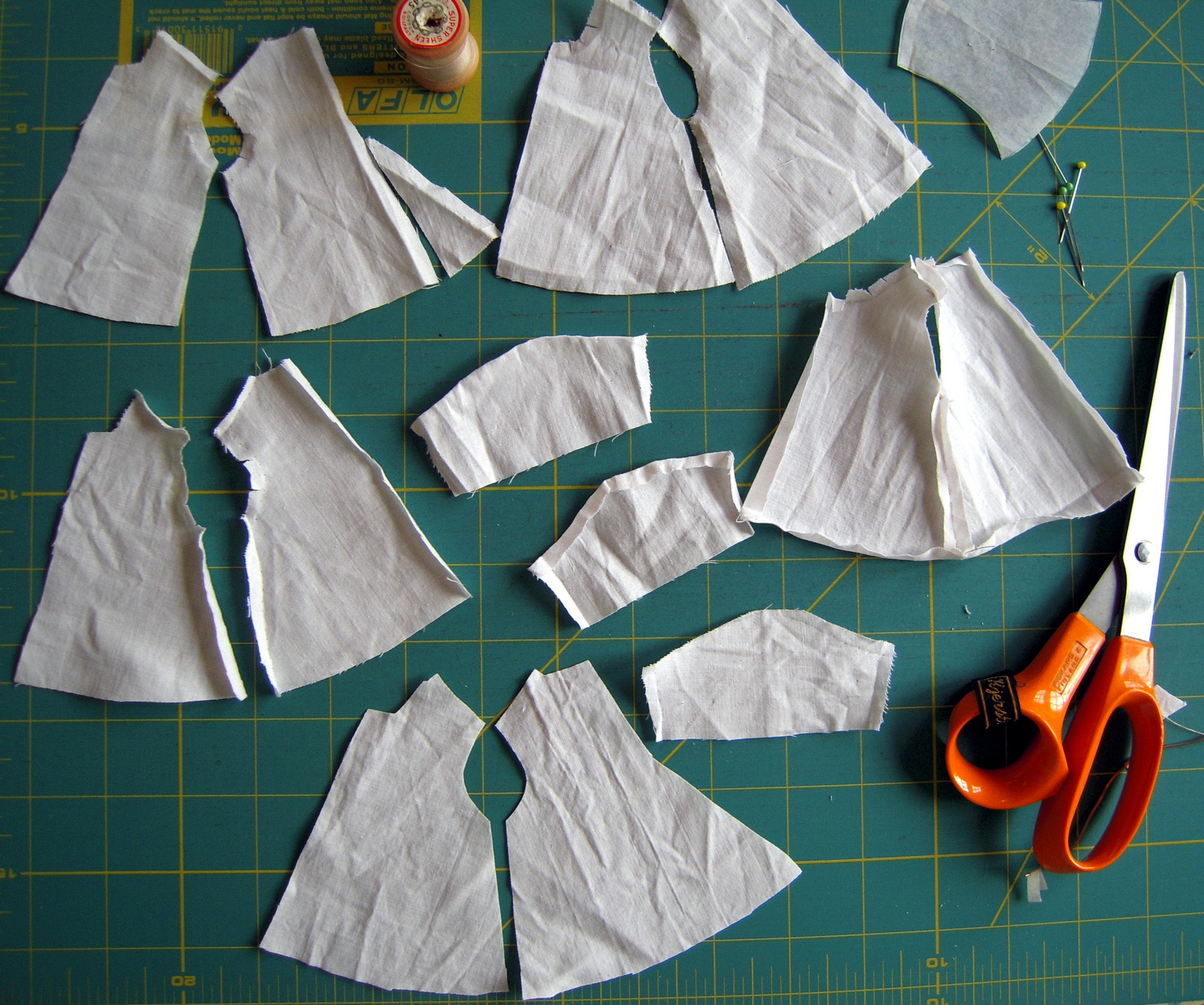
The fifth version is good!
Sometimes it takes a few tries! Constance is getting tired of white muslin and fittings, and is dreaming of blue velvet (but not so people will sing about her).
.
.
This is the third post about making the “Miss Pinch Pelisse”… click here to see all the posts about the Pelisse.
.
.


 Quimper Hittys
Oh my gosh! You have a ton of patience. I know it will pay off because of the beautiful pieces you’ve made. It’s interesting to see the process! laura
It’s fun for me, and the proof will be in the pudding!!
Such a process has never been shown to me before. Thank you for this lesson in “dressmaking”.
You’re welcome, I enjoy the process.
This is a fascinating description of how to make a dress pattern. The Quimper Hittys are very lucky to have such a dressmaker in the family. I am sure they are very appreciative.
Well they appreciate the results anyway. They find the process by turns alarming (so many pins!) and boring (not another fitting!).
No wonder it takes me 12 tries to get a pattern right–I never learned the dressmaker’s secrets! All is now revealed. I wonder if I can remember to use these tips the next time I try to make a pattern.
It can be tricky! I have made lots of clothes for humans and dolls, and I still never start with the real cloth.
A delightful visit today that also taught me so much! It seems that I know very little about this craft and find myself utterly entranced as the outfit is created right before our eyes!
It is taking a while as real life sometimes interferes with the fun, but we hope the wait will be worth it.
Oh MY GOODNESS. With all the care taken to make a custom fit garment I can hardly wait to see the finished item!!
It’s definitely a piece of artistry in the works. I admire your skill!
Well I am certainly enjoying the process! I hope that Constance can wear the finished Pelisse out to the Theatre when it is finished!
Constance is a patient girl. Fittings are essential to get a beautiful dress at the end of it all. I am sure Constance understands this and is excited about her blue dress.
Fitting is essential but not fun for anyone – big or small!
I really enjoyed seeing how you made the changes in the muslin. The wire/sleeve technique is genius.
Thanks very much – I sometimes try to adapt big-people’s methods, and enjoy the creative process…with Hitty it can be tricky since they are not all a standard size!