A Miss Pinch Pelisse V
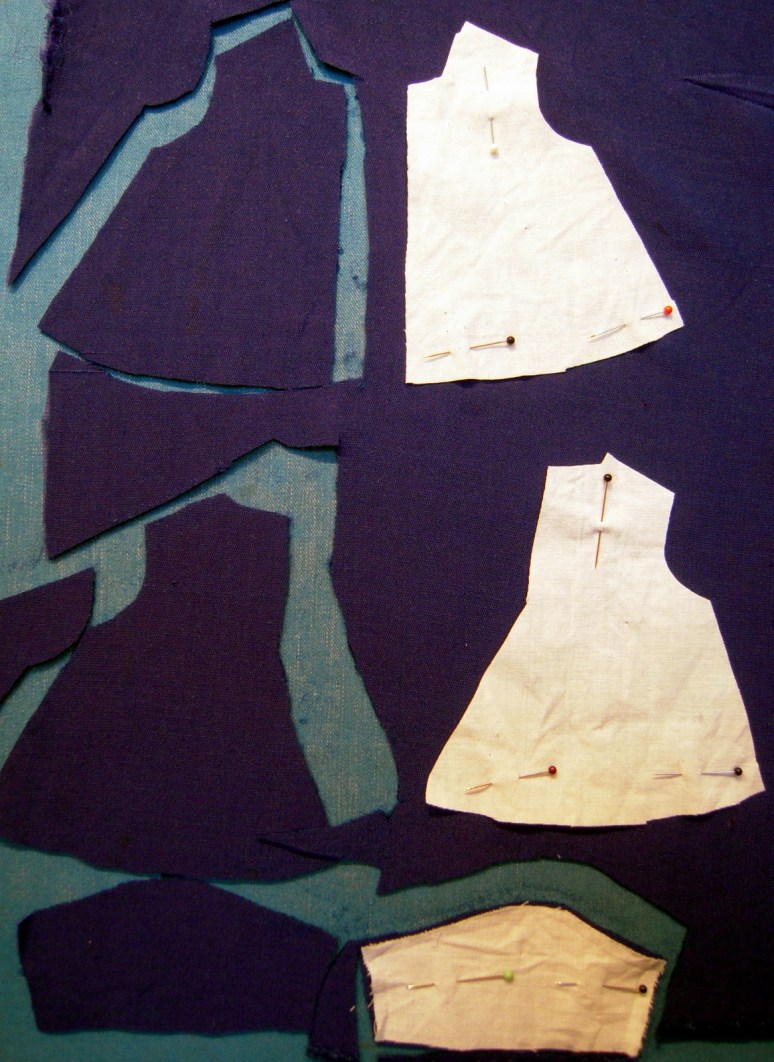
Cutting the Velvet.
The pattern pieces are laid out on the wrong side of the fabric. When sewing with velvet, it is very important both to keep the straight grain, and to lay out the pattern with the nap going in the same direction for all the pieces. You can’t fret about wastage of fabric.
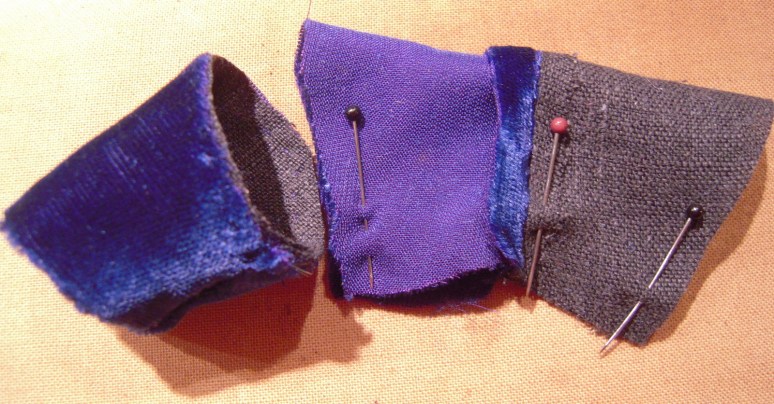
Sleeve Construction.
A linen lining is cut out to match the velvet pieces. Linen is nice because it keeps its’ shape, and well worn, soft linen will not be too stiff for a Hitty-sized garment. The sleeves are sewn to the sleeve linings at the hem, then the underarm seam is stitched. Then the sleeves are turned so the velvet is on the outside.
.
.
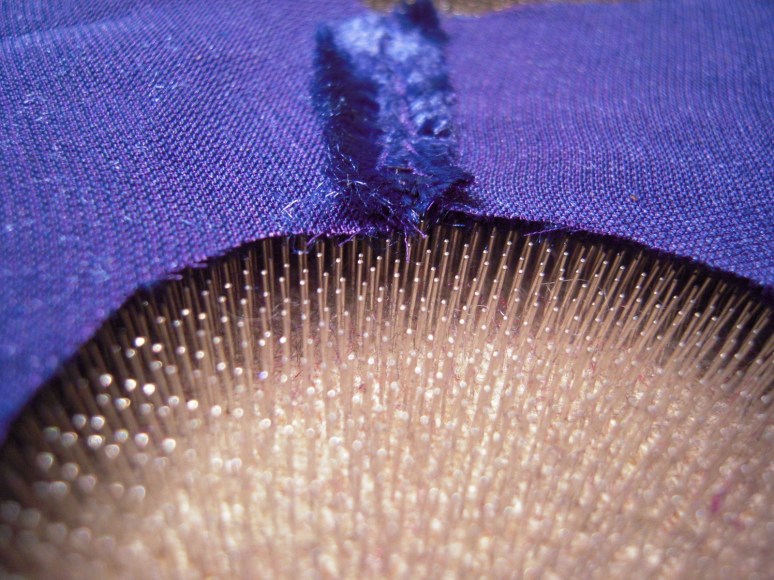
The needleboard.
This needleboard is used for ironing velvet, the pile side is placed onto the spikes and the seam can be pressed .
.
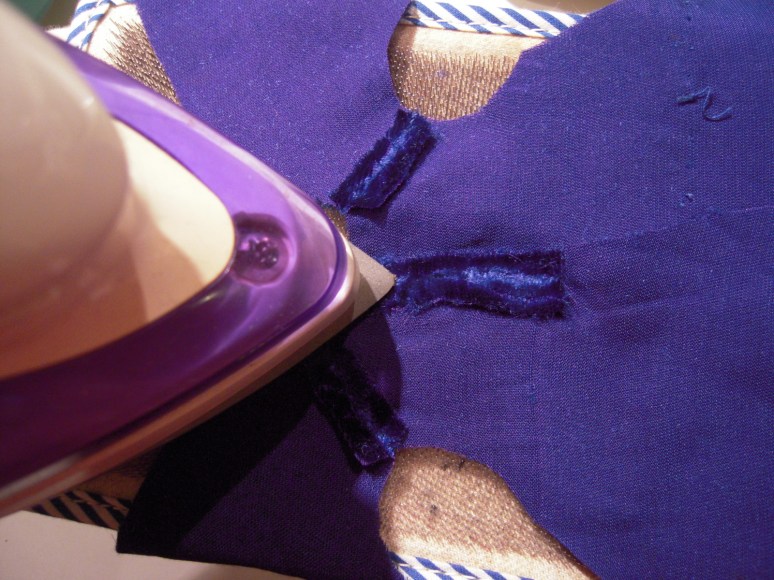
Pressing on the needleboard.
The velvet body pieces are sewn together at shoulder, side and back seams, and the seams pressed open on the needleboard.
.
.

Pressing the lining shoulder seam.
The lining is stitched together at shoulder seams and side seams, but not the back seam. The centre back of the lining will be left open so the garment can be turned right side out through the gap. The linen lining seams are pressed open over a small sandbag.
.
.

Stitching the lining to the velvet.
The garment is sewn to the lining around the outside edge – neck, fronts and hems.
.
.

Clipping the curved edge.
The curved edge is clipped before turning the garment inside out.
.
.

Sleeves set in.
The armscye opening is snipped for ease, and the sleeve is set in. First the sleeve is stitched to the velvet side, then the linen side is sewn over the seam so the inside is nice and tidy with no raw edges…now the garment is constructed, but not decorated.
.
This is the fifth post about making the “Miss Pinch Pelisse”… click here to see all the posts about the Pelisse.
.
.


 Quimper Hittys
Wow…..thank you so much for such clear instructions and photos. You’ve done a beautiful job….can’t wait to see the decorations.
You are welcome – I am enjoying the process, and the finished piece will be a nice addition to the Quimper Hitty wardrobe.
You are making great progress indeed, and it is very interesting to see how you are going about making this.
Thanks very much. I am not a trained tailor, so these techniques are just what I’ve learned as I go along. For me this kind of sewing is very satisfying, I love to be making something out of nothing!
I had no idea about needle boards until now. One of those wonderful bits of technology likely with a long history. This is shaping up to be a great addition to the Quimper Hittys’ wardrobe – they must be very excited.
The needleboard I borrowed is very small one used for pressing seams on velvet garments. The Hittys are glad that a very small velvet garment is headed their way.
I love this series! We get to see incredible clothing come to life, right in front of our eyes, and we get to learn something! I still think I am too nervous to play with needles myself, last time I tried I discovered new perforations in myself afterwards; according to the owners manual, this shouldn’t be the case. So then, I will follow you along from a safe distance and truly enjoy the event unfolding right here!
Toad, stay away from sharp things, but if you must pick up a needle you should ply it, not play with it.